
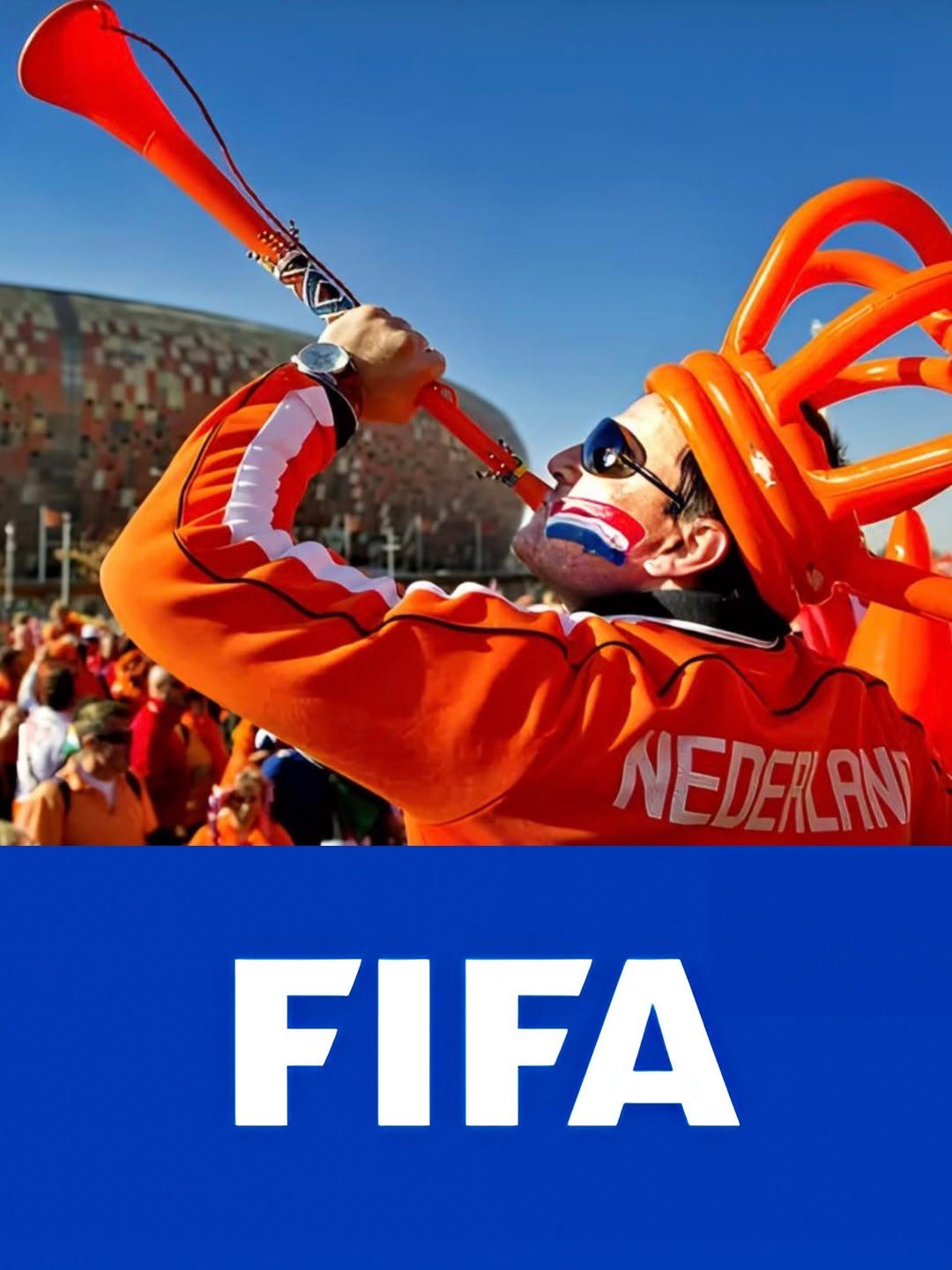
The horn that defined South Africa 2010 will not be heard in the USA, Canada or Mexico.
What FIFA Has Ruled
FIFA’s 35-page Stadium Code of Conduct for the 2026 World Cup officially prohibits vuvuzelas, whistles, air horns, loudspeakers, and any device deemed excessively loud or disruptive. The ban applies across all 16 World Cup stadiums for the entire month-long tournament running June 11 to July 19.
Also now banned: laser pointers — due to their potential to distract players, referees and officials — and reusable water bottles, cans, jars and cups, which will not be permitted inside stadiums either.
Musical instruments are also subject to restrictions, with larger instruments generally requiring prior written approval from tournament organisers to be brought into venues.
Why — The Numbers Tell the Story
With 48 teams competing across 104 matches in three countries — the largest World Cup in history — FIFA says standardised rules are essential to maintaining safety, streamlining entry procedures, and ensuring a consistent matchday experience across all venues.
A vuvuzela can produce sounds of up to 120 decibels — a level comparable to a chainsaw and close to the threshold of physical pain.
FIFA also considered the impact on player and coaching communication during matches, as the constant high-pitched buzz makes it difficult for players and coaches to hear instructions — as well as the challenges for broadcasters, whose commentary can be drowned out entirely by the noise.
The Water Bottle Controversy
The vuvuzela ban has generated debate, but it’s the reusable water bottle ban that is drawing the sharpest criticism — particularly given the summer heat in the host cities.
World Weather Attribution researcher Dr. Theodore Keeping raised serious concerns: “Allowing fair and equitable access to hydration is a basic first defence against the extreme heat risks climate change is bringing to this World Cup.” FIFA maintains that water stations and cooling infrastructure around stadiums will help address those concerns.
The Legacy It Leaves Behind
The vuvuzela is not just another banned stadium item. It became part of the identity of the 2010 World Cup in South Africa, where the constant sound of the plastic horn provided one of the tournament’s most memorable backdrops — a FIFA World Cup HQ post on X itself acknowledged how extremely popular vuvuzelas were during that tournament.
The 2026 tournament will therefore look and sound noticeably different for supporters who remember South Africa 2010 for its colour, energy and unmistakable stadium noise. The new code does not remove the vuvuzela from World Cup history — but fans attending matches in 2026 will have to leave the horn outside the stadium gates.
Full List of What’s Banned
- Vuvuzelas
- Air horns & whistles
- Loudspeakers & loud noise-making devices
- Laser pointers
- Reusable water bottles, cans & jars
- Body paint cannot substitute for clothing
One of football’s most iconic sounds — silenced. South Africa 2010 remains untouchable as a memory.