
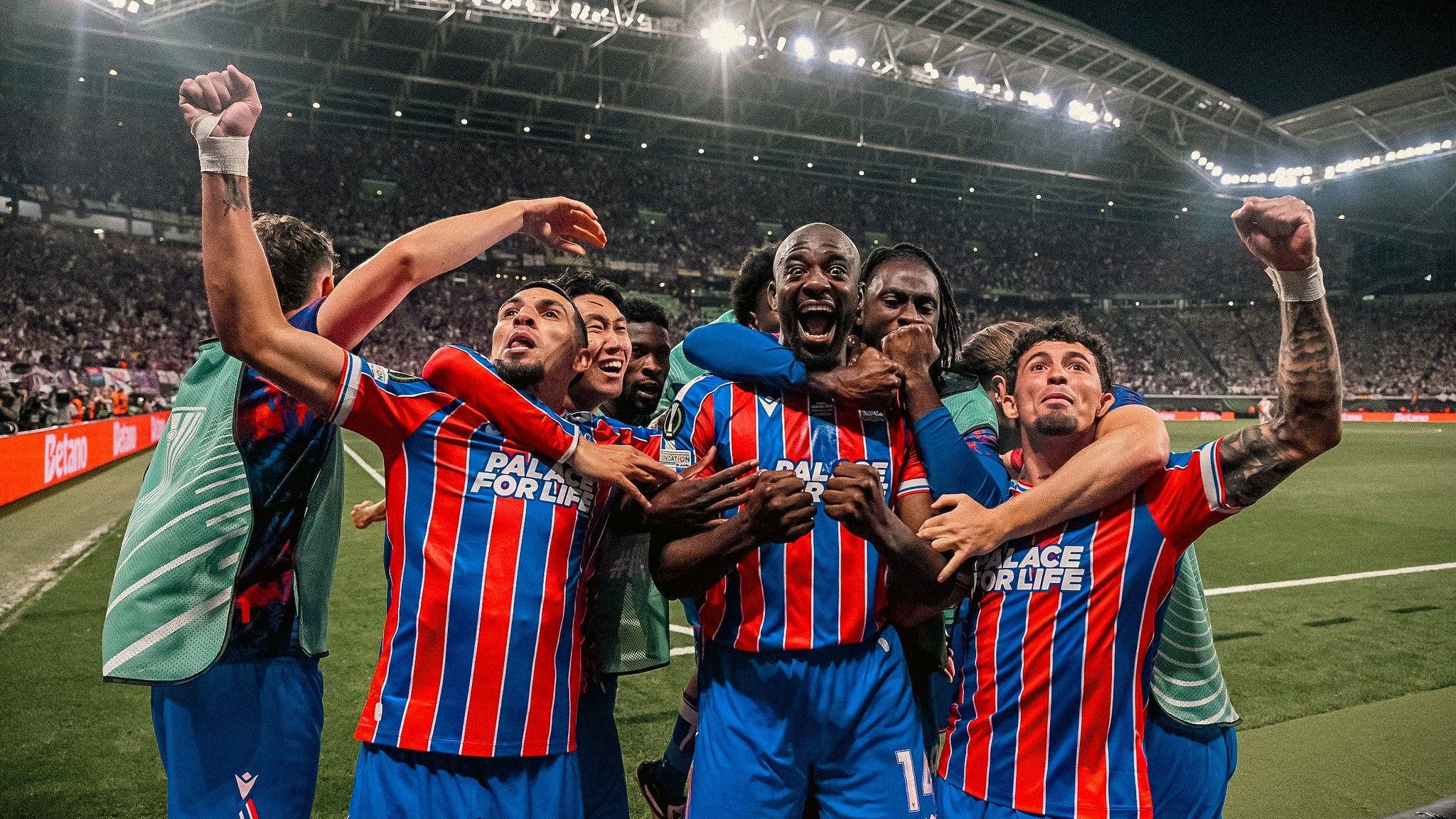
The Eagles soar to glory in Leipzig, claiming their first-ever European trophy in a night South London will never forget.
Crystal Palace and Rayo Vallecano met at Leipzig Stadium on May 27, 2026, in the UEFA Conference League final — both clubs making their maiden appearance in a major European final, in only their second continental campaigns. When the final whistle blew, it was Crystal Palace who were crowned champions of Europe’s third-tier competition, delivering glory to Selhurst Park for the second consecutive season.
A Perfect Send-Off for Glasner
With miracle man Oliver Glasner confirmed to depart Crystal Palace in the summer, the club had the opportunity to give him the perfect send-off by securing a first-ever European trophy in Leipzig — and they delivered. The Austrian has now cemented himself as arguably the greatest manager in Crystal Palace’s history, having delivered back-to-back trophies to a club that had spent most of its existence dreaming of moments like this.
A UEFA Europa League winner with Eintracht Frankfurt and the architect of Crystal Palace’s first major trophy — the FA Cup — Oliver Glasner has now gone one better, adding European silverware to his extraordinary legacy in south London.
Sarr the Talisman
Throughout the campaign, one player stood head and shoulders above the rest. Ismaïla Sarr finished as the competition’s top scorer with nine goals — a figure no other player came close to matching. The Senegalese winger was electric from start to finish, and his performances in the knockout rounds were nothing short of sensational.
In the round of 16, it was Sarr who opened the scoring against AEK Larnaca before delivering the extra-time winner, sweeping in Daichi Kamada’s 99th-minute cross to send Palace through. It was the kind of moment that defines European campaigns — and Sarr provided several of them.
Palace’s Road to Glory
The Eagles’ journey to Leipzig was anything but straightforward. Crystal Palace entered the competition as newcomers, winning on their very first league phase outing against Dynamo Kyiv in Lublin, with Daniel Muñoz and Eddie Nketiah getting the goals.
They navigated the knockout playoff by beating Zrinjski Mostar, then edged past AEK Larnaca in extra time in the round of 16. In the quarter-finals, Crystal Palace produced a tactical masterclass to dismantle a formidable Fiorentina side 3-0 at Selhurst Park, with Jean-Philippe Mateta scoring and assisting as Glasner’s high-intensity system overwhelmed the Italians.
A Worthy Opponent
Anyone expecting a comfortable final had not tangled with Rayo Vallecano yet. The club from the working-class Vallecas neighbourhood of Madrid had shown an indomitable spirit throughout the competition, with goals in every line of their team under coach Íñigo Pérez. Prior to this season, Rayo’s only previous UEFA campaign had ended in a quarter-final defeat to Alavés in the 2000/01 UEFA Cup — 25 years of waiting for another chance at this stage.
Alemão had struck four goals in the competition, while Álvaro García and Isi Palazón each contributed three. They made Palace work for every inch of this trophy.
History Written in Leipzig
Crystal Palace’s only previous European games had come in the 1998 edition of the now-defunct UEFA Intertoto Cup. From that obscure corner of football history to Conference League champions — it is a journey almost too remarkable to believe.
Back-to-back trophies. A manager who turned a mid-table Premier League club into genuine winners. And a fanbase that, after decades of near-misses and heartache, finally has its moment in the European sun.
Oliver Glasner, Crystal Palace. Champions of Europe. What a story.